



Bolzano Bozen, the Open-Air Museum of Wine
11 August 2026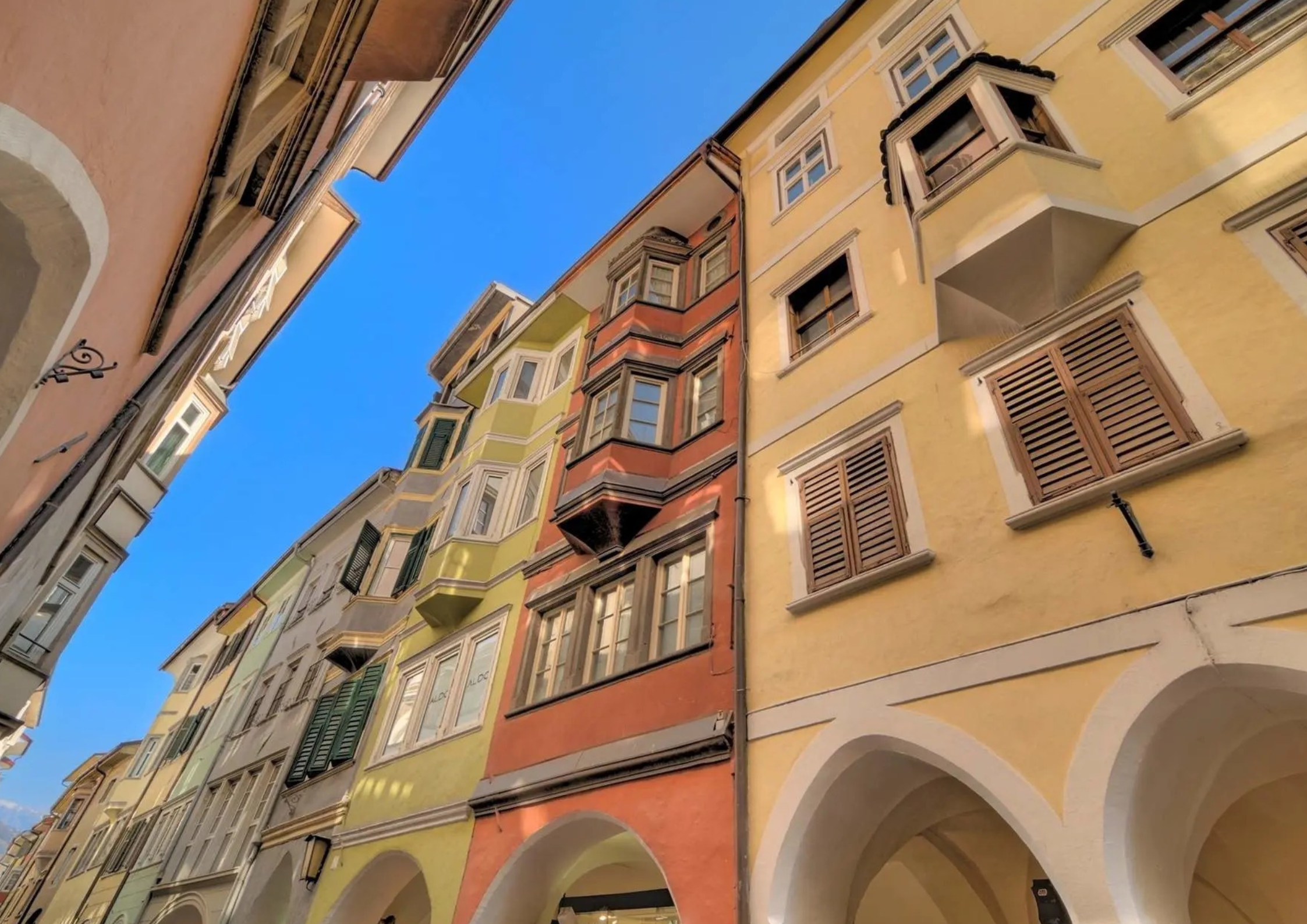
Bolzano Bozen, the Open-Air Museum of Wine
Eight stops tracing the city’s wine culture
Walking through Bolzano Bozen means travelling through centuries of wine history. Wine has shaped the city not only in the surrounding vineyards of Santa Maddalena and Gries, but also in the heart of the historic centre. Behind façades, along narrow streets and in city squares, numerous traces remain of the time when Bolzano was one of the most important wine and trading centres between the North and South. A walking tour through the city’s “open-air museum of wine.”
1. Mercantile Museum
The Mercantile Museum, housed in the historic Mercantile Building, tells the story of Bolzano as an international trading city. Original trade documents, textile sample books, furniture and historical records offer an insight into the era when merchants from across Europe travelled to the Bolzano trade fairs. Wine was one of the most important commodities traded at the time.
2. The Porticoes (Portici-Laubengasse)
For centuries, the Porticoes of Bolzano were the economic heart of the city. Wine merchants, warehouses and inns once occupied the spaces beneath their characteristic rounded arches. Today, historic vaulted cellars and traditional wine shops still evoke the period when wines from South Tyrol and the Alpine region were traded here. Only a few of the original wine cellars have survived, but traces of the city’s once-thriving commercial activity can still be found in many places.
3. Bindergasse-Via dei Bottai
The name of this narrow historic street already reveals its story: it was once home to coopers, who made the wooden barrels used to transport and store wine. Without their craft, the development of Bolzano’s wine trade would hardly have been possible. A stroll along the street is well worth it – with a medieval atmosphere thrown in for free.
4. Market Square
Today, fruit and vegetable stalls dominate the square, but wine was also sold here in the past. The square was an important trading place where farmers, merchants and innkeepers came together. Those who look closely can still spot traces of the commercial activity of the time on some of the surrounding buildings. The Market Square was also home to traditional inns and Torggeln, where wine was served and traded. The Torgglhaus at the Market Square is a particularly well-known example.
5. Kornplatz-Piazza del Grano and Palais Toggenburg
At Kornplatz, a coat of arms carved in stone and featuring grapes and a pruning knife recalls the city’s winemaking tradition. This often-overlooked detail points to the close connection between the trade, storage and serving of wine in historic Bolzano.
6. Cathedral and Cloister
Bolzano Cathedral is dedicated to the Assumption of Mary and St Vincent of Saragossa. Since the Middle Ages, Vincent has been venerated in many wine-producing regions as the patron saint of winegrowers. In the Gothic cloister, vines and grapes appear as important Christian symbols, referring to Christ as the “true vine” and to the Eucharist. At the same time, these motifs reflect Bolzano’s close connection with the surrounding wine-growing landscape.
7. Capuchin Monastery with a Small Vineyard
A hidden testimony to Bolzano’s wine history can be found in the Capuchin Garden. The vines planted here are a reminder that viticulture was once a natural part of the urban landscape, with vineyards reaching almost to the historic centre.
8. Maretsch Castle
Few places illustrate the connection between the city and wine as clearly as Maretsch Castle. The Renaissance castle stands amid vineyards and makes visible just how closely Bolzano has historically been linked to winegrowing. Today, among other functions, it hosts the traditional Bolzano Winekost-Mostra Vini, continuing to serve as an important centre of the city’s wine culture.
Tip: If you want to follow this walking tour, take your time and remember to look up from time to time. Coats of arms, barrel symbols, vine motifs and historic inscriptions reveal traces of the story that, to this day, makes Bolzano one of the most important wine cities in the Alpine region.
Image: Laubengasse-via dei Portici, Courtesy Sergio Buono
Text: Ursula Pirchstaller.