



Hidden Potential in Grape Pomace
28 January 2026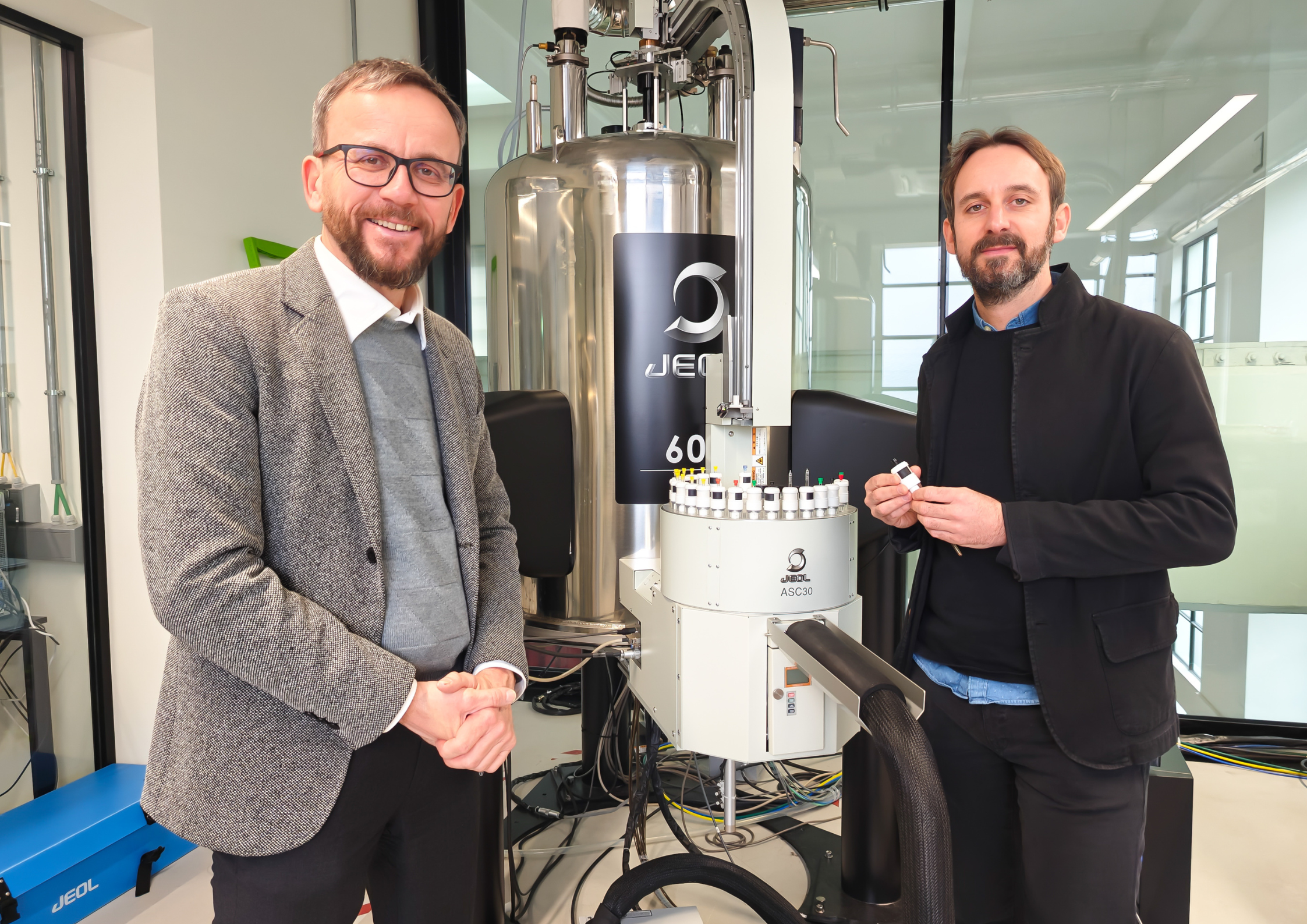
Hidden Potential in Grape Pomace
Researchers at NOI Techpark are extracting molecules from grape residues as part of the “Sustain” project that could be effective against Alzheimer’s and Parkinson’s diseases.
Producing 100 liters of wine generates around 30 kilograms of pomace, that is, grape skins, seeds, and stems. It is usually used as fertilizer or to produce spirits. Yet this apparent waste product contains numerous bioactive substances that can be used beyond agriculture, including in medicine. This is exactly what the research team led by UNIBZ university professor of Food Science and Technology Emanuele Boselli and Head of the Oenolab at the NOI Techpark research center in Bolzano, is working on.
Using high-resolution Nuclear Magnetic Resonance (NMR), molecules from grape residues are analyzed in the lab. Attention is given to polyphenols by Alberto Ceccon, Head of the NMR laboratory at Laimburg Research Centre. “These secondary plant compounds are extremely beneficial and are used in many fields,” the researcher explains. The “Sustain” project has now made it possible to isolate those molecules within the polyphenols that have a particularly strong inhibitory effect on amyloid proteins. “These proteins are involved in several neurodegenerative diseases such as Alzheimer’s and Parkinson’s,” Ceccon explains. Conversely, certain compounds found especially in grape shoots, skins, and seeds could counteract brain aging. Promising initial results have already been achieved after one year of work through in-vitro testing. The next step, in cooperation with the Università Politecnica delle Marche, will be in-vivo studies, that is, tests on cell cultures.
In order to be able to receive and store large quantities of grape pomace, the Free University of Bozen-Bolzano and the Laimburg Research Centre successfully took part in a call for proposals of the European Regional Development Fund (ERDF) in the summer with the project “Zero Residue.”
“We have now begun planning suitable infrastructure in January, which will make it possible to deliver grape residues as well as other food by-products,” Professor Boselli says, looking to the future. If, in the spirit of the circular economy, active molecules can be extracted from what is considered waste and used for medical purposes, the researchers’ efforts will certainly have been worthwhile.
Caption: Emanuele Boselli, head of the Oenolab (left), and Alberto Ceccon, head of the NMR Spectroscopy Laboratory at the Laimburg Research Centre (right), in front of the equipment used to extract and analyze polyphenols and expose them to a magnetic field.
Photo: Ursula Pirchstaller