



Person of the Month: Andrea Cerri, New Director of Teatro Stabile of Bolzano-Bozen
30 August 2026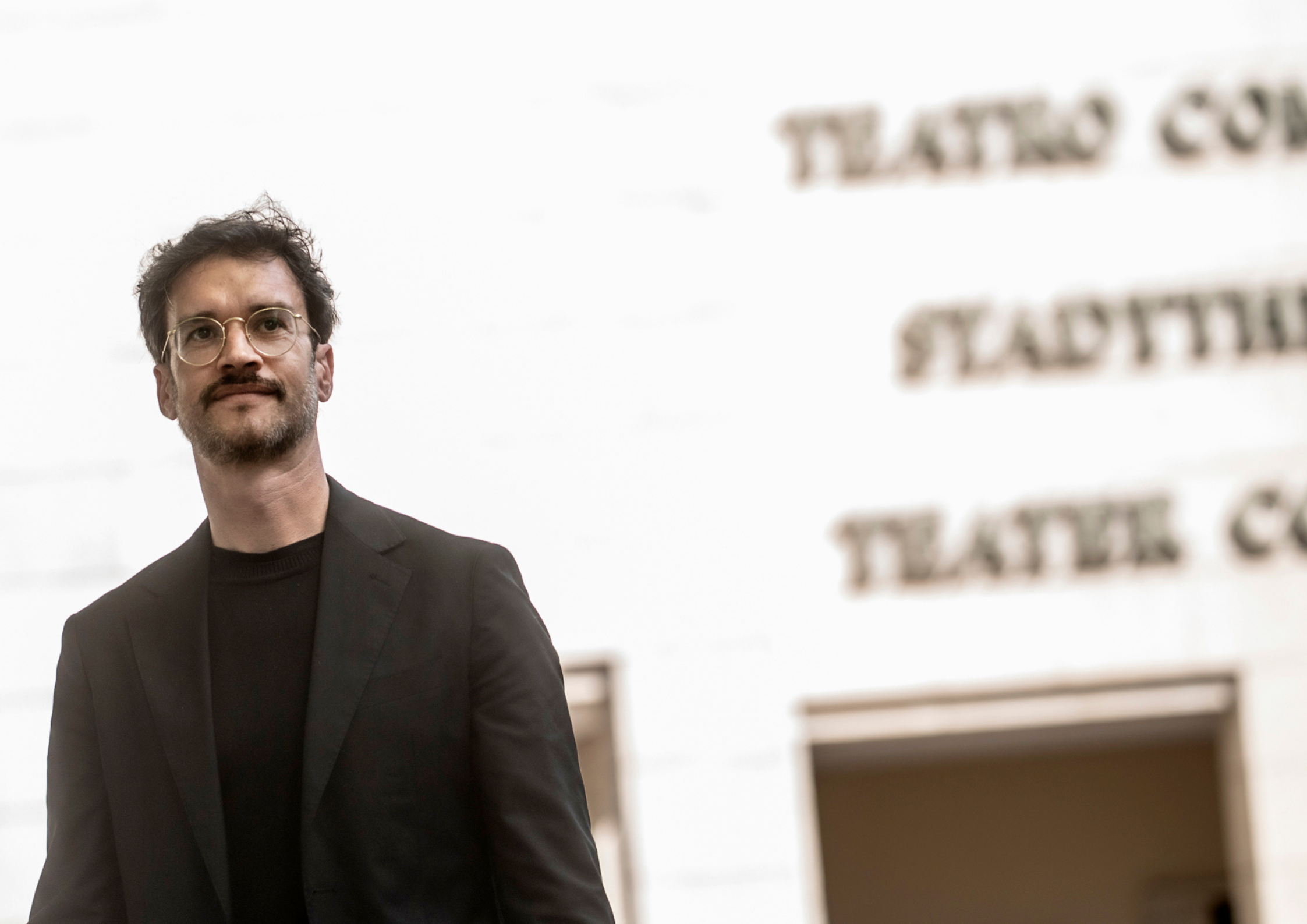
Person of the Month: Andrea Cerri, New Director of Teatro Stabile of Bolzano-Bozen
Cultural manager and artistic director with more than fifteen years of experience, Andrea Cerri has developed expertise in socio-economic, management and humanities fields, as well as specialising in theatre organisation and cultural project development.
What motivated you to take on the role at Teatro Stabile of Bolzano-Bozen?
Teatro Stabile of Bolzano-Bozen is an institution of great national prestige, and anyone working in this field knows it. It was the second public theatre to be established in Italy, following the one in Milan, with those in Genoa and Turin coming later. It was the result of the revolutionary vision of Paolo Grassi and Giorgio Strehler, who strongly believed in public theatre.
I had already visited Bolzano-Bozen several times in the past to attend performances, as well as to organise a production by BALLETTO CIVILE. I have collaborated with Teatro Stabile of Bolzano-Bozen on several occasions; one of the most recent was the co-production of “Bidibibodibiboo”, the award-winning production by Francesco Alberici, which was staged in Bolzano-Bozen. It was a new dramatic work that proved to be a successful project.
When Walter Zambaldi accepted the position at Fondazione Teatro della Toscana and the call for applications for Bolzano-Bozen was announced, I submitted my application – and here I am.
And what are your first impressions?
Very positive. I have found a very well-structured organisation – something that can also be perceived from the outside – but from within you work with a staff that shows exceptional dedication. The technical and administrative teams, as well as the entire organisation, are made up of people who genuinely care about the institution and its role as a public service.
From an economic perspective, the organisation is in excellent health, and there is a strong sense of responsibility when it comes to managing public funds in the best possible way. As far as productions are concerned, I have found an environment with well-established relationships with major national and international names, as well as emerging young talents.
The handover was very collaborative. I believe the committee chose me because of the direction I have pursued so far. I have always sought to present a theatre that explores new artistic languages and new ways of staging performances, while paying close attention to avoiding self-referentiality and ensuring broad accessibility.
Do you intend to pursue this approach in your projects for Teatro Stabile of Bolzano-Bozen?
I would like to fulfil the mission of making theatre accessible to a broad audience, making it increasingly less elitist by breaking down barriers that are often not economic, but cultural. I want a theatre for everyone, while continuing to offer artists and works capable of challenging and surprising audiences.
How do you intend to achieve this?
In my view, one strategy is to promote new directors and playwrights, creating opportunities for emerging young talents to collaborate with more established artists who are always willing to perform on the Bolzano-Bozen stage.
I would also like to bring performances to Bolzano-Bozen from an international context that address current issues linked to the complexity of our present-day world through new forms of expression.
Thirdly, I attach great importance to the Teatro Stabile di Comunità project, which aims to involve people living in situations of vulnerability, such as people in prison, residents of nursing homes, and people with physical or psychological disabilities, including conditions related to eating disorders.
Artistic quality must always remain at the centre, including in these projects. I believe that involving people experiencing vulnerability can further enrich theatrical research.
So, a network involving the local area and its institutions?
Absolutely. In this regard, I would like to expand collaborations with other important local cultural institutions such as the Haydn Orchestra, Vereinigte Bühnen Bozen, Transart, the Busoni Competition and many others.
But alongside the more established organisations, I would also like to connect the associations that do excellent work in the local community. La Ribalta, led by Antonio Viganò, immediately comes to mind.
Developing collaborations with these cultural associations could lead to mutual growth and strengthen the cultural fabric as a whole. A theatre that is open and serves its local community, while maintaining the national profile that Teatro Stabile of Bolzano-Bozen has built up over the years.
Image: Andrea Cerri, Courtesy Ivo Corrà