



Person Of The Month: Frau Sabina Waibl
03 January 2026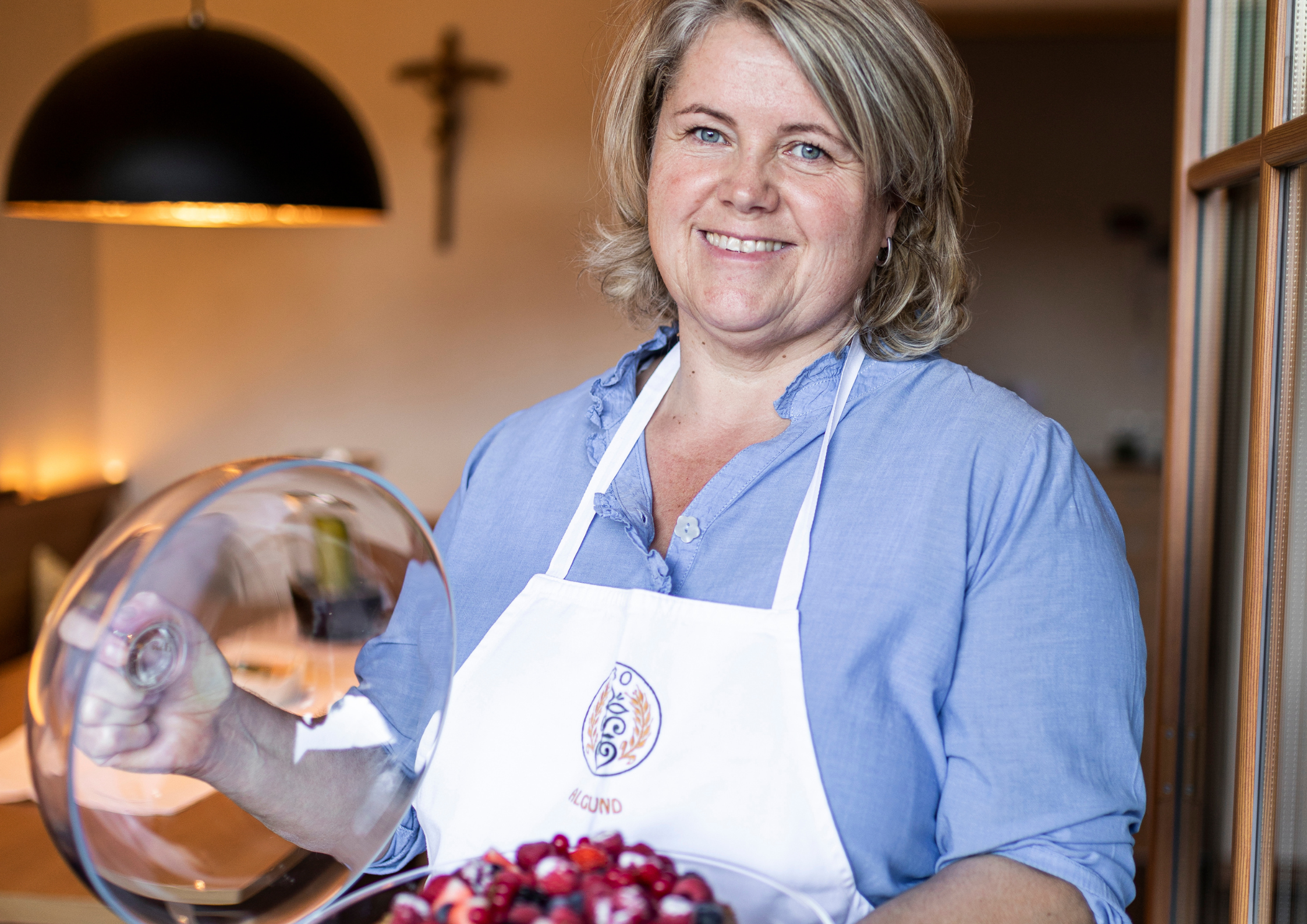
Person Of The Month: Frau Sabina Waibl
Ms. Sabina Waibl, “Roter Hahn” is the umbrella brand for farmers’ primary and secondary activities and aims to bring people closer to a piece of South Tyrolean rural lifestyle.
Among the various initiatives of “Roter Hahn”, the cooking school in which you participate was also created. Is there a strong interest in South Tyrolean culinary traditions?
There is indeed great interest in South Tyrolean cooking traditions. One reason is the culinary diversity our cuisine offers: the combination of Alpine and Mediterranean traditions is a unique feature that many people find fascinating. Participants also appreciate the high-quality regional products we use in our cooking classes, such as speck, cheese, game meat, wine, apples, and much more. The traditional dishes prepared from these ingredients, such as dumplings, Schlutzer, and Strauben, fit perfectly with the current trend toward regional and authentic cuisine.
In your opinion, what positive effects do projects aimed at enhancing the territory, such as those organized by “Roter Hahn”, have on South Tyrol's capital, Bolzano-Bozen?
Our cooking school certainly has many positive effects on the provincial capital, Bolzano-Bozen, culturally, economically, socially, and in terms of tourism. We offer an attractive experience for people interested in gastronomy and culture. Our cooking courses can also be booked as part of gourmet packages, hotel experiences, or event programs. Many visitors discover South Tyrolean cuisine while on holiday and then wish to recreate the dishes at home. From an economic perspective, the cooking school brings many benefits to regional producers, farmers, wineries, butcher shops, and dairies from Bolzano and the surrounding area, from whom we source our high-quality ingredients. The cooking school is also a meeting place for locals and guests alike, and it is always wonderful to see how people who did not previously know each other connect through cooking together, leading to great conversations while enjoying the meal at the table. In addition, our cooking courses take place year-round and can also be attended outside the main tourist season.
What challenges do you see farmers facing today in managing their farms?
Today, many farmers face major challenges in managing their farms. Economic pressure is often high, as production costs for labor, machinery, and energy have risen, while producer prices are under pressure due to dependence on global markets. Investments in modern facilities or sustainability technologies are expensive and take a long time to pay off. Climate change is also strongly felt in agriculture. Late frost, hail, drought, and heavy rainfall are increasing. Higher temperatures promote new insects, pests, and fungal diseases. Irrigation is becoming increasingly difficult as water demand rises while availability fluctuates seasonally. Labor shortages are another major challenge: seasonal workers are hard to find, and without sufficient staff, harvesting and maintenance work suffer. Sustainability and environmental protection requirements often require adjustments on farms. Many farms in South Tyrol are small-scale operations and therefore economically difficult to sustain in the long term. Without specialization, direct marketing, or additional income—such as farm holidays—economic survival is often difficult, and there is frequently a lack of farm succession. Bureaucratic workload should not be underestimated either, as it continues to increase. EU and national regulations lead to extensive paperwork, documentation, and inspections, and quality certifications are often time-consuming and costly.
Farm work has always taken place in harmony with nature. How can sustainability be reconciled with technological innovation, which has become indispensable today?
Sustainability and technological innovation do not exclude each other; on the contrary. Technologies do not replace traditions; they complement them. Modern technology can help make traditional farming practices even more environmentally friendly, efficient, and effective. Technology should be understood as a tool that supports the core principles of sustainable agriculture rather than replacing them. One example is precise irrigation through drip systems, often computer-controlled, which supply water to the soil according to actual needs, thereby reducing water consumption. In livestock farming, new systems also contribute to better living conditions. Modern technologies help ensure animals are kept in a species-appropriate and healthy way, one of the core values of many South Tyrolean farms. Many farms in South Tyrol are nearly energy self-sufficient thanks to photovoltaic systems on farm or barn roofs, heat recovery systems, and modern cooling and storage technologies, a perfect example of modern, sustainable agriculture.
You are an expert in traditional South Tyrolean cuisine. Would you like to share a recipe with us?
Oh, an expert, if being an expert means being able to cook traditional cuisine, talk about it, and bring our agriculture closer to people with passion, expertise, and respect for traditions, then I gladly accept this title and would be happy to share one of my favorite recipes with you…
Image: Sabina Waibl, Courtesy Armin Huber