



Person of the Month: The Ginkgo Tree in the Courtyard of Palais Campofranco
30 January 2026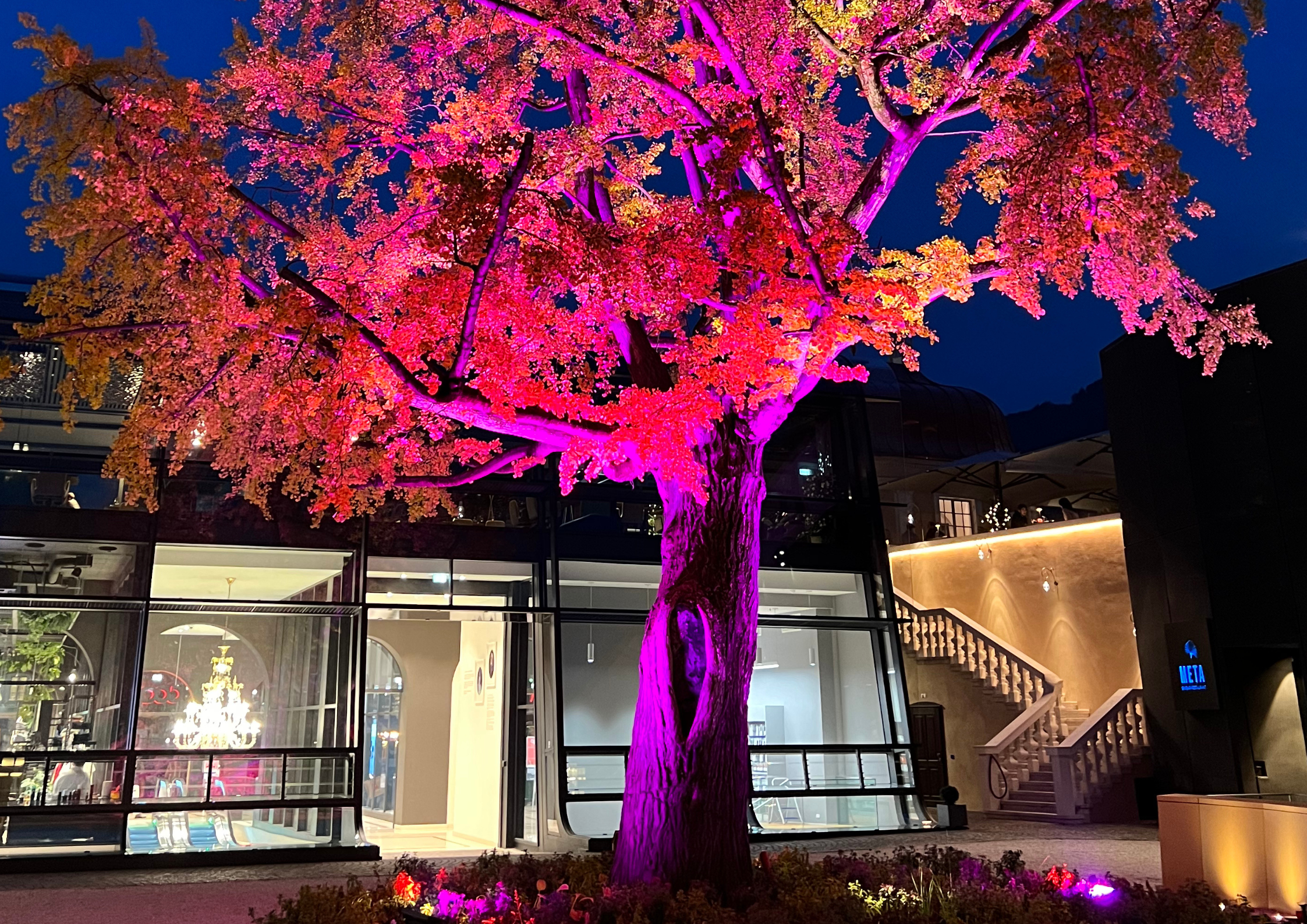
Person of the Month: The Ginkgo Tree in the Courtyard of Palais Campofranco
In the heart of the city, on the western side of Walther Square, an enchanting courtyard opens within a beautiful noble palace of Baroque architecture: Palais Campofranco. The site has an ancient history dating back to the early days of the merchant city. It tells the story of a wealthy Florentine family of merchants and bankers named De Rossi, who around the year 1300 moved from Florence to Bolzano, where they purchased this plot of land to build their residence.
The family, which became one of the most influential in the city, later acquired citizenship and fully integrated into the local community, adopting the surname Botsch. Their residence was subsequently sold to the Mayrl family and completely rebuilt in 1760.
The history of the palace intertwines with that of the ginkgo biloba tree, which still majestically stands in the inner courtyard some one and a half centuries later. From 1848 onward, the noble building served as the residence of Archduke Joseph Rainer of Habsburg, Field Marshal of the Austrian Army and Viceroy of Lombardy-Venetia, who had fled the Lombard capital following the famous “Five Days of Milan.” He lived in the palace with his wife Elisabeth of Savoy-Carignano, sister of Charles Albert, King of Sardinia. The exact date of the ginkgo’s arrival in Bolzano is unclear, but legend has it that Empress Elisabeth of Austria, known as Sisi, during one of her many journeys to South Tyrol, gifted the exotic tree to Heinrich (one of the couple’s eight children) who continued to live in the palace on Via della Mostra.
A Lieutenant General and commander of the 62nd Infantry Regiment, Heinrich later found himself fighting against the newly established Kingdom of Italy ruled by the House of Savoy, part of his own family. It is no coincidence that the gifted tree was a ginkgo: this rare botanical species symbolized then, as it does today, love, friendship, hope, and peace.
At the time, the palace courtyard was a rich botanical garden, as was fashionable among the aristocracy of the era. The vegetation, originating from China and the Far East, included rare plants such as orchids, white-stemmed brambles, yellow-green ferns, and unusual blooms that created an unexpected exotic garden in the heart of Bolzano.
After 150 years, the ginkgo of Palais Campofranco bears witness to how this species -having existed on Earth for 250 million years and survived natural and man-made catastrophes- truly deserves the title of “living fossil.” To preserve it during the redevelopment works of the palace, now known as Campofranco after Heinrich’s only daughter Maria Rainera (1872–1936) married the Sicilian nobleman Enrico Lucchesi Palli, Prince of Campofranco, a large underground container was built, and river pebbles, upon which the city itself is founded, were placed around the trunk.
The ginkgo is therefore one of the symbols of Bolzano and in 2000 was also named “Tree of the Millennium,” a natural monument bearing witness to the passage of life and the succession of generations in the very heart of the city center. Maria lived at Palais Campofranco until her death, after which the palace was acquired by Countess Renata Kuenburg, grandmother of the current owner, Georg Kuenburg. Upon opening the renovated courtyard to the public, with the ginkgo at its center, he declared his wish for it to be a place of meeting and well-being; a symbol of love, indeed.
Image: The Ginko Tree, Courtesy Palais Campofranco