



Silbergasse–Via Argentieri, the history of the city and its mercantile origins
16 April 2026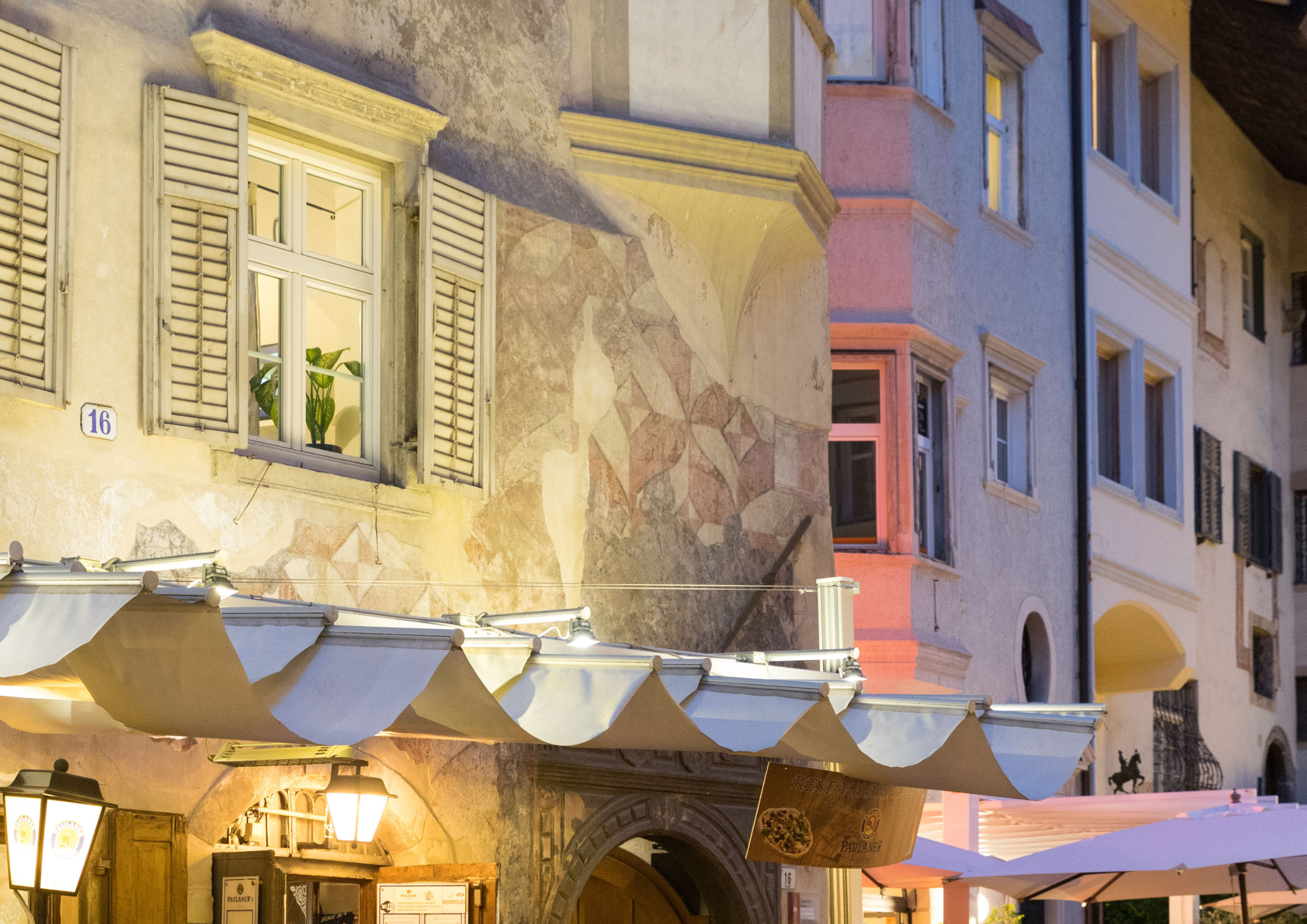
Silbergasse–Via Argentieri, the history of the city and its mercantile origins
Silbergasse–Via Argentieri, which connects Piazza del Grano to Piazza delle Erbe, is one of the oldest streets in Bolzano. Its name (“Argento” corresponds to “Silber” in German), unlike Via Bottai—where medieval records document the presence of barrel makers—does not derive from goldsmiths, but from the Silberhaus, or “House of Silver,” a building located on the corner of Piazza del Grano. Its origin runs parallel to the construction of the Lauben (arcades) around the 12th century; in fact, via Argentieri developed where an ancient moat once marked the southern border of the medieval merchant district.
With the construction of the oldest buildings on the northern side of the street—which, through internal courtyards and very narrow alleys, overlook the arcades on the opposite side—the moat was gradually filled in. An example of a typical Laubenhaus is the Eccel Kreuzer House, which hosts a remarkable collection of local artists, although it is currently closed to the public. This building has a late Romanesque core and extends from the southern side of the arcades to Via Argentieri. Another testimony to the street’s ancient origins and medieval architecture is the Troylio House, once owned by a merchant family from Rovereto who moved to Bolzano. The building is characterized by a late medieval corner tower and, on its façade, still clearly displays frescoes from the 15th, 16th, and 17th centuries.
A completely different architectural style is represented by the Mercantile Building, located just a short distance to the east. It is one of the city’s true jewels and the only Baroque/Renaissance-style building in Bolzano, constructed between 1708 and 1727. Formerly the seat of the Mercantile Court—established to resolve commercial and economic disputes and based on privileges granted by Claudia de’ Medici in 1635—it now houses the Mercantile Museum. Beyond its architectural significance, Via Argentieri is today one of the liveliest streets in the city center, featuring bars and restaurants open late into the night and frequented by both locals and visitors. It also hosts various commercial activities, some of which occupy entire buildings extending all the way to the via Portici, allowing for dual access from two different streets.
Image: Via Argentieri, courtesy Thomas Rötting